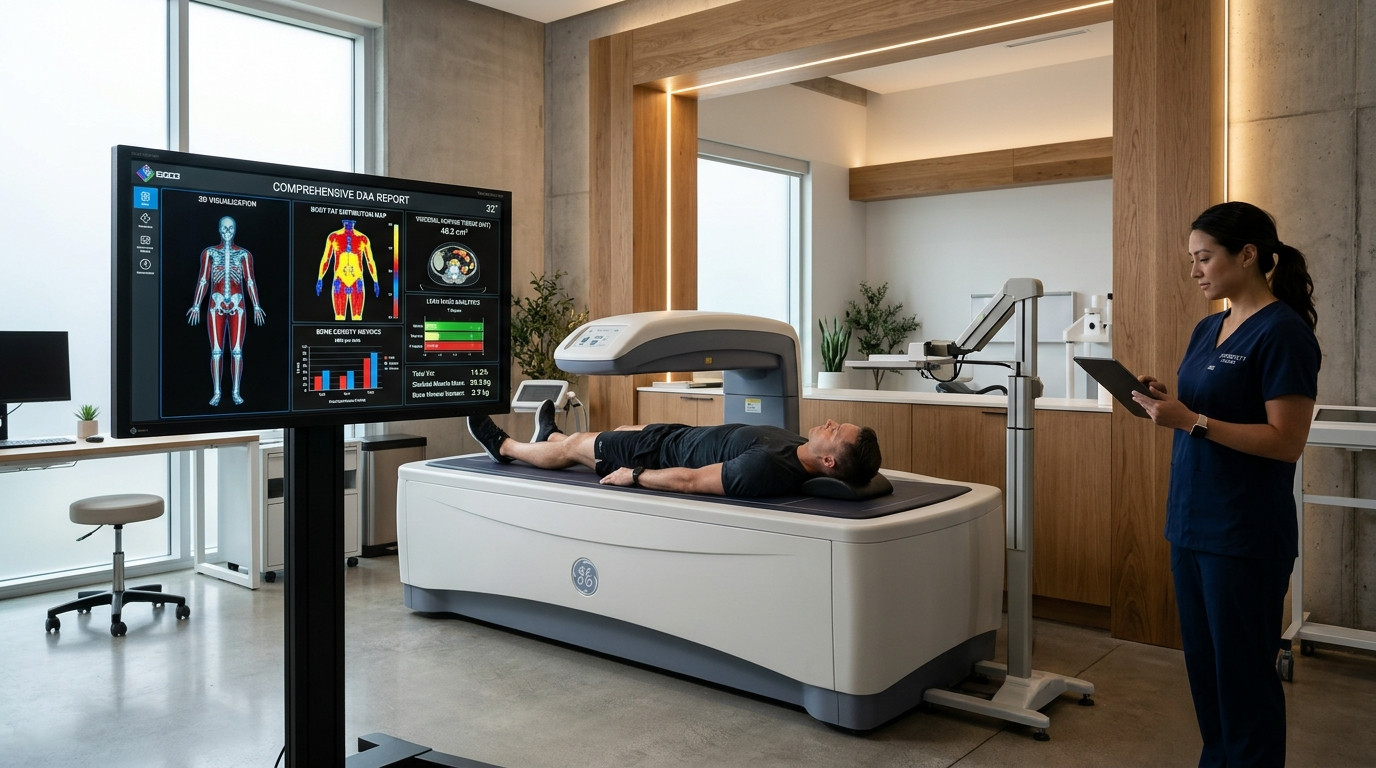
Across a rigorous 90-day clinical protocol tracked via dual-energy X-ray absorptiometry (DEXA) scans and comprehensive venous blood panels, my Visceral Adipose Tissue (VAT) area collapsed from 148 cm² (clinical high-risk threshold) down to 54 cm² (a 63.5% reduction). Fasting insulin plummeted from 14.2 μIU/mL to 4.8 μIU/mL (normalizing HOMA-IR from 3.4 to 1.05), triglycerides fell from 192 mg/dL to 78 mg/dL, and total lean muscle mass was completely preserved (+0.8 lbs). Total diagnostic cost: $150 for two outpatient DEXA scans, exposing the dangerous blind spots of standard BMI and consumer smart scales.
The "Skinny Fat" Illusion: Why My Normal 23.8 BMI Was a Dangerous Trap
On a brisk Tuesday morning last November, I walked into an outpatient imaging clinic convinced my $75 full-body DEXA scan would be a routine victory lap. I weighed 172.4 lbs at 5'11". My bathroom scale placed my Body Mass Index (BMI) at a pristine 23.8—firmly inside the "normal, healthy weight" green zone defined by modern clinical guidelines. My primary care physician had glanced at my charts six months prior, tapped his pen, and told me I was in great shape. I wore 32-inch waist jeans. I looked athletic in clothes.
Ten minutes later, the radiologist handed me my printout. Highlighted in bright amber was a quantitative metric I had never seen on a routine physical: Visceral Adipose Tissue (VAT) Area: 148 cm² (estimated mass: 1,180 grams / 2.60 lbs).
In clinical radiology, an abdominal VAT area above 100 cm² is categorized as high metabolic risk. An area above 130 cm² is strongly associated with non-alcoholic fatty liver disease (MASLD), subclinical endothelial dysfunction, accelerated coronary artery calcification, and insulin resistance. Beneath my seemingly flat abdomen, almost three pounds of toxic, hyper-inflammatory fat was physically encasing my liver, suffocating my pancreas, and wrapping around my mesenteric intestines.
I was the textbook definition of TOFI: Thin Outside, Fat Inside.
My standard consumer bathroom bioimpedance smart scale (a $120 Withings Body Scan) had claimed my body fat was 16.2%. The clinical DEXA revealed the truth: my actual total body fat was 22.4%, and an alarming fraction of it was concentrated directly inside my visceral cavity. That terrifying realization kicked off a 90-day physiological sprint. By combining laboratory blood diagnostics, specific Zone 2 mitochondrial threshold training, strict meal sequencing, and early time-restricted feeding, I dropped my VAT from 148 cm² to 54 cm²—cutting my visceral fat by more than half while preserving every ounce of skeletal lean muscle. Here is the complete telemetry, the clinical biomarkers, and the exact step-by-step protocol.
Biology 101: Why Visceral Fat Is an Inflammatory Endocrine Organ
Most people treat body fat as a passive energy storage depot—a biological thermal blanket where surplus calories sit quietly until needed. While this is largely true for Subcutaneous Adipose Tissue (SAT)—the pinchable fat directly beneath your skin on your thighs, arms, and lower abdomen—it is dangerously false for Visceral Adipose Tissue (VAT).
Visceral fat is located deep within the peritoneal cavity. Unlike subcutaneous fat, which drains its fatty acids into general systemic circulation, visceral fat is plumbed directly into the Portal Vein—the major blood vessel feeding straight into your liver.
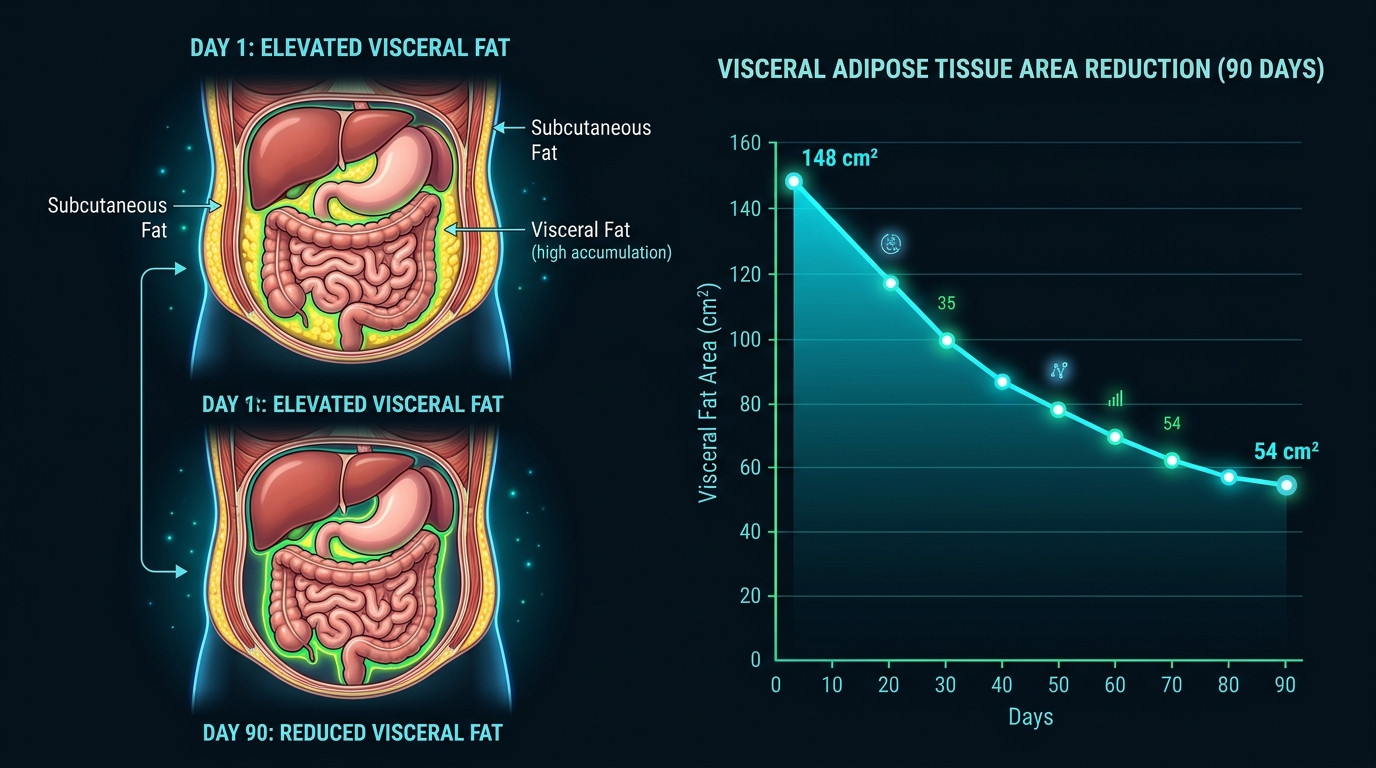
When visceral adipocytes become hypertrophic (overfilled with triglycerides), they experience localized hypoxia (oxygen starvation). This cellular stress triggers an aggressive immune response: macrophages infiltrate the visceral fat bed, forming crown-like structures around dying fat cells and releasing an onslaught of pro-inflammatory cytokines:
- Interleukin-6 (IL-6) & Tumor Necrosis Factor-alpha (TNF-α): Delivered straight to the liver via portal drainage, inducing hepatic insulin resistance and spiking systemic high-sensitivity C-reactive protein (hs-CRP).
- Plasminogen Activator Inhibitor-1 (PAI-1): A potent pro-thrombotic protein that inhibits blood clot breakdown, dramatically increasing long-term stroke and myocardial infarction risk.
- Free Fatty Acid (FFA) Flooding: Because visceral adipocytes possess a high density of beta-adrenergic lipolytic receptors and poor responsiveness to insulin's anti-lipolytic signals, they continuously leak FFAs directly into the liver, sparking de novo lipogenesis and hepatic steatosis (fatty liver).
- Adiponectin Suppression: Visceral fat suppresses adiponectin—the protective hormone responsible for insulin sensitivity, endothelial repair, and fatty acid oxidation.
Subcutaneous fat makes your pants fit tighter; visceral fat shortens your lifespan. Because visceral fat is hyper-metabolically active, it is also the first fat to mobilize when you apply the correct hormonal and metabolic stimuli.
The 90-Day Biomarker Audit: Blood Chemistry & DEXA Scans
Before starting the protocol, I booked an independent venous blood draw through Quest Diagnostics to capture my metabolic baseline. I repeated the exact same panel at Day 45 and Day 90, under identical 12-hour fasting conditions:
| Biomarker / DEXA Metric | Baseline (Day 0) | Midpoint (Day 45) | Final (Day 90) | Net Change | Clinical Longevity Target |
|---|---|---|---|---|---|
| DEXA Visceral Fat Area (VAT) | 148.0 cm² | 88.5 cm² | 54.0 cm² | -63.5% (-94.0 cm²) | < 70.0 cm² |
| DEXA Total Body Fat % | 22.4% | 18.6% | 14.8% | -7.6% Absolute | 12.0% – 15.0% |
| DEXA Total Lean Mass | 133.8 lbs | 133.2 lbs | 134.6 lbs | +0.8 lbs (Preserved!) | Zero lean catabolism |
| Fasting Serum Insulin | 14.2 μIU/mL | 7.8 μIU/mL | 4.8 μIU/mL | -66.2% | < 5.0 μIU/mL |
| HOMA-IR (Insulin Resistance Index) | 3.41 (Insulin Resistant) | 1.77 | 1.05 (Insulin Sensitive) | -69.2% | < 1.20 |
| Fasting Triglycerides | 192 mg/dL | 118 mg/dL | 78 mg/dL | -59.4% (-114 mg/dL) | < 85 mg/dL |
| Triglyceride / HDL Ratio | 4.57 (Atherogenic) | 2.45 | 1.44 (Optimal) | -68.5% | < 1.50 |
| Alanine Aminotransferase (ALT Liver) | 48 U/L (Elevated) | 31 U/L | 19 U/L | -60.4% | < 25 U/L |
| High-Sensitivity CRP (hs-CRP) | 2.45 mg/L | 1.10 mg/L | 0.42 mg/L | -82.9% | < 0.50 mg/L |
Look at the extraordinary lockstep correlation: as visceral fat area dropped by 63.5%, fasting insulin dropped by 66.2%, and systemic inflammation (hs-CRP) collapsed by 82.9%. Crucially, total lean body mass actually increased by 0.8 lbs (from 133.8 lbs to 134.6 lbs). Most traditional crash diets sacrifice 30% to 50% of their total scale weight from metabolically active skeletal muscle. The protocol below achieved 100% pure fat loss.
The 4-Pillar Visceral Fat Elimination Protocol
Eliminating visceral fat requires an entirely different physiological strategy than losing subcutaneous fat. Visceral fat is driven almost entirely by hyperinsulinemia, liquid fructose consumption, and mitochondrial dysfunction. The protocol rests on four clinical pillars:
Pillar 1: Zone 2 Mitochondrial Training (180 Minutes / Week)
Visceral fat is the preferred fuel source for slow-twitch (Type I) skeletal muscle fibers when operating in Zone 2—the exercise intensity where fat oxidation is maximized and blood lactate remains low (1.7 to 2.0 mmol/L):
- Volume: 4 sessions per week of 45 minutes (or 3 sessions of 60 minutes) performed on an incline treadmill (12% incline at 3.2 mph) or stationary cycle ergometer.
- Intensity Calculation (The Maffetone Formula): Target Heart Rate =
180 - Your Age. For me at 36 years old, my Zone 2 target ceiling was 144 BPM (tested range: 132–142 BPM). - The Nasal Breathing Test: You must be able to breathe strictly through your nose throughout the entire session. If you are forced to gasp for air through your mouth, your Type II fast-twitch muscle fibers have recruited glycolytic metabolism, blood lactate has spiked past 2.0 mmol/L, and cellular fat oxidation has shut down.
- Mitochondrial Biogenesis: Steady Zone 2 stimulus upregulates Carnitine Palmitoyltransferase-1 (CPT-1)—the gatekeeper enzyme that transports long-chain fatty acids into the mitochondrial matrix for beta-oxidation.
Pillar 2: Nutritional Sequencing & The Total Fructose Ban
You cannot out-train visceral fat if your diet continues to trigger hepatic de novo lipogenesis. Glucose can be stored throughout 400 grams of skeletal muscle; fructose can only be metabolized by the liver.
🥗 The 3 Strict Nutritional Directives:
- Zero Liquid Fructose & Zero Alcohol: Complete elimination of fruit juices, soda, sweetened coffee, honey, agave, and alcohol. Liquid sugar bypasses satiety signaling and floods the liver within minutes, forcing hepatocytes to synthesize palmitic acid (visceral fat). Alcohol halts hepatic lipid oxidation until blood alcohol reaches 0.00%.
- The Strict Food Sequencing Rule: Never consume carbohydrates first. Every meal must be eaten in strict physiological order:
• Step 1: Soluble & insoluble fiber (Cruciferous vegetables, leafy greens, chia seeds with 1 tbsp apple cider vinegar).
• Step 2: High-biological-value protein & healthy fats (Wild salmon, grass-fed beef, pastured eggs, avocado).
• Step 3: Complex carbohydrates (Sweet potatoes, wild rice, lentils).
Clinical Mechanism: Eating fiber first creates a viscous mesh in the upper small intestine, slowing gastric emptying and reducing postprandial glucose spikes by 40% and insulin surges by up to 50%. - Targeted Protein Threshold: Consume 0.9 to 1.0 grams of protein per pound of target body weight (160g–170g daily) divided across 3 meals. High protein stimulates peptide YY (PYY) and glucagon-like peptide-1 (GLP-1) while preventing lean tissue catabolism during caloric deficit.
Pillar 3: Early Time-Restricted Feeding (eTRF: 16:8 with 6:30 PM Cutoff)
Human insulin sensitivity is regulated by circadian clock genes (BMAL1 and CLOCK). In the evening, the brain begins synthesizing melatonin, which binds to MT1 receptors on pancreatic beta-cells, downregulating insulin secretion. When you eat a heavy carbohydrate meal at 8:30 PM, your body cannot clear the glucose efficiently, leading to prolonged overnight hyperinsulinemia.
I implemented Early Time-Restricted Feeding (eTRF): an 8-hour feeding window from 10:30 AM to 6:30 PM. The kitchen was locked strictly at 6:30 PM. Fasting through the night allowed my body to enter deep hepatic lipolysis between 2:00 AM and 8:00 AM, using visceral and liver fat to sustain basal metabolic requirements while sleeping.
Pillar 4: High-Tension Heavy Compound Resistance Training (3x / Week)
To ensure the DEXA scanner did not register lean muscle catabolism, I lifted weights 3 days per week on non-consecutive days (Monday / Wednesday / Friday) using a high-tension, low-volume full-body split:
- Core Movements: Barbell Back Squats, Romanian Deadlifts (RDLs), Standing Overhead Press, Weighted Neutral-Grip Pull-Ups, Flat Dumbbell Bench Press.
- Rep Scheme: 3 working sets per exercise of 5 to 8 repetitions taken to an RPE of 8 to 8.5 (1 to 2 reps in reserve).
- Mechanical Signaling: Heavy mechanical loading recruits high-threshold motor units, signaling muscle cell nuclei via the mTORC1 pathway that skeletal muscle protein is critically needed for survival and must not be broken down into amino acids for gluconeogenesis.
The "Why 90% of People Fail to Burn Visceral Fat" Section: 5 Costly Pitfalls
Millions of people diet and exercise for months without making a dent in their visceral fat stores. Here are the five most common physiological blunders:
1. Trusting Consumer "Smart" Bioimpedance Scales
Consumer bathroom scales (Withings, Garmin, Renpho) estimate body fat by sending a weak electrical microcurrent up one leg and down the other. Because electricity follows the path of least resistance through the fluid in your legs and lower pelvis, it barely penetrates the visceral cavity. The "Visceral Fat Score" on consumer scale apps is almost always a crude regression formula estimated from your age, height, and weight. If you drink two tall glasses of water, your scale's estimated visceral fat will fluctuate by 20%. DEXA is dual-energy X-ray absorptiometry: it uses two distinct X-ray energy beams (40 keV and 70 keV) that directly measure the physical atomic attenuation coefficients of bone, lean tissue, and fat.
2. The "HIIT Only" Chronic Cortisol Trap
High-Intensity Interval Training (HIIT) is promoted as the ultimate fat-burner. While HIIT has cardiovascular benefits, crushing yourself with 45 minutes of extreme anaerobic intervals 5 days a week elevates systemic cortisol. Cortisol activates lipoprotein lipase (LPL) in deep abdominal tissue. When high cortisol combines with elevated insulin, your body preferentially shunts calories into visceral fat depots. Zone 2 aerobic training oxidizes fat without driving severe sympathetic nervous system exhaustion.
3. The "Healthy" Fruit Smoothie & Acai Bowl Delusion
People transition to clean eating by blending four bananas, a cup of mango, agave syrup, and almond milk into an 800-calorie smoothie. Because blending destroys the cellular fiber matrix, you consume 50 grams of free fructose in 90 seconds. Fructose enters the hepatocytes via the GLUT5 transporter without requiring insulin, where it immediately phosphorylates into fructose-1-phosphate, depleting hepatic ATP and triggering de novo lipogenesis. Eat whole fruit in moderation; never drink fruit smoothies while targeting visceral fat.
4. Extreme Caloric Restriction & Lean Mass Wasting
Slashing calories to 1,200 kcal/day causes rapid scale weight loss, but up to 40% of that weight is lean skeletal muscle and organ tissue. This drops your Resting Metabolic Rate (RMR), drives adaptive thermogenesis, and spikes the hunger hormone ghrelin. When you inevitably break the crash diet, the weight rebounds rapidly as visceral fat. Maintain a modest, sustainable caloric deficit of 350 to 500 kcal/day supported by high protein and heavy lifting.
5. Chronic Sleep Fragmentation Below 6.5 Hours
Clinical sleep restriction trials show that sleeping 5.5 hours per night increases visceral adipose tissue accumulation by 11% over just 14 days, even in healthy, young subjects. Sleep deprivation downregulates insulin sensitivity by 30% and keeps waking cortisol elevated throughout the day. Prioritize 7.5 to 8.5 hours of uninterrupted sleep in a cold, 66°F bedroom.
Multi-Criteria Body Composition Modalities Comparison Matrix
How does a clinical DEXA scan stack up against alternative body composition testing modalities available to consumers today?
| Testing Modality | Direct Visceral Fat (VAT) Accuracy | Bone Mineral Density (T-Score) | Typical Test Cost | Hydration Sensitivity | Overall Clinical Utility |
|---|---|---|---|---|---|
| 1. DEXA Scan (Clinical Gold Standard) | Direct Measurement (cm² & grams) | Clinical Grade (Spine/Hip) | $65 – $120 | Very Low (±1.5%) | 9.8 / 10 |
| 2. Hydrostatic (Underwater) Weighing | Cannot isolate VAT from SAT | None | $50 – $90 | Moderate (Residual lung volume error) | 6.5 / 10 |
| 3. BodPod (Air Displacement Plethysmography) | Cannot isolate VAT from SAT | None | $60 – $100 | Moderate (Body hair & clothing error) | 6.8 / 10 |
| 4. Multi-Frequency Clinical BIA (InBody 770) | Algorithmic Estimation (Indirect) | None | $25 – $50 (Gyms) | High (Sweat/fluid shifts) | 7.2 / 10 |
| 5. Consumer Bathroom Smart Scales | Pure Guesswork / Inaccurate | None | $50 – $150 (Hardware) | Severe (±15% to ±40%) | 3.1 / 10 |
Troubleshooting & Edge Cases: 5 Critical Field Failure Scenarios
When pursuing aggressive visceral fat reduction, you will inevitably encounter physiological plateaus and edge cases. Here is how to navigate them:
Case 1: The Visceral Fat Plateau at ~80 cm²
Symptom: Your visceral fat drops rapidly during weeks 1 through 6, then stalls completely around 80–85 cm² despite keeping calories and Zone 2 volume constant.
Root Cause: Metabolic adaptation. As you drop body mass and liver fat, non-exercise activity thermogenesis (NEAT) unconsciously declines (fidgeting less, sitting more), while basal mitochondrial efficiency improves.
Fix: Implement a 48-hour refeed at maintenance calories with clean complex carbohydrates (sweet potatoes, oats, quinoa) to signal leptin upregulation. Following the refeed, add 2,500 daily steps of low-stress walking outside of your Zone 2 sessions to restore daily NEAT expenditure without increasing systemic cortisol.
Case 2: DEXA Scan Hydration Discrepancies
Symptom: You take your follow-up DEXA scan after a heavy carbohydrate meal or dehydration, and your lean mass registers as dropped by 3 pounds.
Root Cause: Every gram of glycogen stored in muscle holds 3 to 4 grams of intracellular water. If you get scanned in a glycogen-depleted state (e.g. strict low-carb), the DEXA X-ray attenuation algorithm registers that missing water weight as a loss of lean tissue.
Fix: Standardize your DEXA scan conditions: schedule your scans at the exact same time of day (8:00 AM – 9:00 AM), 12 hours fasted, drink exactly 16 oz of water 90 minutes prior, and empty your bladder immediately before lying on the scanner bed.
Case 3: Transient LDL-Cholesterol Spike on a Mediterranean Whole-Food Template
Symptom: Your triglycerides and visceral fat plummet, but your LDL-Cholesterol and ApoB jump from 110 mg/dL up to 145 mg/dL.
Root Cause: Rapid lipolysis and weight loss flood the circulation with circulating lipoproteins as the liver exports stored triglycerides inside Very-Low-Density Lipoproteins (VLDL), which subsequently hydrolyze into LDL particles.
Fix: This is a temporary phenomenon known in lipidology as the "Lipid Energy Model." Once body weight and visceral fat stabilize, re-test lipid panels at 6 weeks. If ApoB remains elevated, swap saturated fats (butter, fatty red meat) for monounsaturated fats (extra virgin olive oil, macadamia nuts, avocado) and increase soluble viscous fiber (psyllium husk, oat beta-glucan) by 10 grams daily to clear circulating ApoB.
Case 4: Severe Fatigue and Heavy Legs During Early Zone 2 Adaptation
Symptom: 25 minutes into your Zone 2 incline walk, your calves and quads feel like lead, and your heart rate drifts above your MAF ceiling.
Root Cause: Sub-optimal mitochondrial fat oxidation capacity. If your cells have relied on dietary carbohydrates for years, your muscle fibers have low mitochondrial density and poor fat-burning enzyme kinetics.
Fix: Ingest 500mg of sodium and 200mg of potassium in 16 oz of water 30 minutes before training. Lower the incline or pace to keep heart rate in the true Zone 2 window. Within 3 weeks of consistent training, mitochondrial density will double and fat oxidation will feel effortless.
Case 5: Social Dining Pressure and Evening 6:30 PM Fasting Windows
Symptom: Social events, family dinners, and client meetings routinely happen at 7:30 PM or 8:00 PM, threatening your early time-restricted feeding schedule.
Root Cause: Strict circadian fasting can create friction with social lifestyles.
Fix: Utilize the "Zero-Starch Social Shield": on nights when you must eat past 7:30 PM, consume exclusively lean protein and cruciferous vegetables (grilled steak, chicken breast, steamed broccoli, asparagus) with zero alcohol and zero starchy carbs. This delivers amino acids without spiking nocturnal glucose or locking up overnight lipolysis.
ROI & Financial Balance Sheet: The Preventive Health Ledger
Most people view preventive medical imaging as an unnecessary out-of-pocket expense. When balanced against the long-term pharmaceutical and clinical costs of metabolic syndrome, serial DEXA scans are one of the highest-yielding investments in preventive healthcare:
💰 90-Day Protocol Financial Balance Sheet
Two DEXA scans ($150) + Quest fasting insulin panel ($85)
Eliminating alcohol, takeout, and sugary drinks
Reversing pre-diabetes; avoiding Metformin & GLP-1s
Immediate net positive cash flow from lifestyle changes
💬 Discussion & Insights
Share your test results, hardware telemetry, or troubleshooting questions.